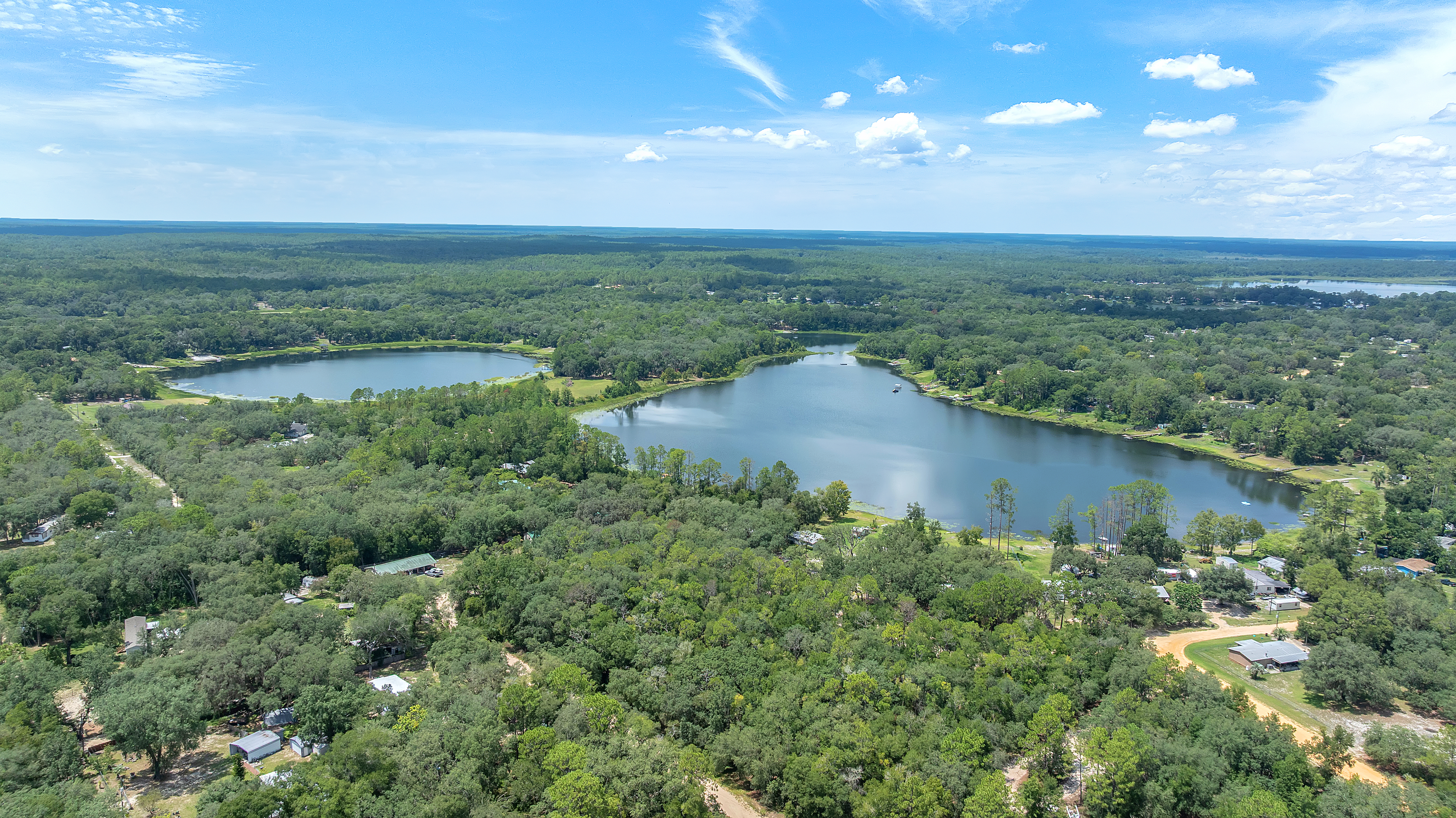
Last week, a couple in their early 50s called me with a dilemma.
"Juliana, we have about $15,000 saved up. We want to invest in Florida real estate, but we can't decide: should we use it as a down payment on a house, or should we buy land outright?"
"What's your goal?" I asked.
"Long-term investment. Maybe retirement in 10 years. We just want to make the smart move."
"Okay, let me ask you this: Do you want to be a landlord?"
"God, no."
"Then you probably want land."
They laughed, but I was serious. Because here's what nobody tells you when you're comparing buying land in Florida versus buying a house:
They're completely different investments with completely different requirements, risks, and rewards.
And one isn't universally "better" than the other. It depends entirely on what you actually want and what you're willing to deal with.
Let me give you the honest comparison I wish someone had given me years ago when I was making this same decision.
The Down Payment Reality Check
Let's start with the most immediate barrier: how much cash you actually need upfront.
Buying a House in Florida:
Traditional Purchase:
● 20% down payment to avoid PMI
● On a $300,000 house = $60,000 down
● Plus closing costs: $6,000-$12,000
● Plus inspection costs: $400-$600
● Plus appraisal: $400-$600
● Total cash needed: $67,000-$73,000
FHA Loan (lower down payment option):
● 3.5% down payment
● On a $300,000 house = $10,500 down
● Plus closing costs: $6,000-$12,000
● Plus inspections and appraisal: $800-$1,200
● Plus PMI (added to monthly payment)
● Total cash needed: $17,300-$23,700
Buying Land in Florida with Owner Financing:
● Down payment: $249
● Doc & Processing fee: $249
● Closing costs: $0 (beyond processing fee)
● Inspection: $0 (it's vacant land)
● Appraisal: $0 (not required)
● Total cash needed: $498
I'm not exaggerating these numbers. This is the actual barrier to entry.
You can own land for under $500. You cannot own a house for that.
Yes, you're buying a smaller asset. But you're also not spending $20,000-$70,000 you don't have.
The Monthly Payment Comparison
Let's compare what you're actually paying every month.
House Ownership Costs (Using $300,000 Purchase):
Mortgage Payment (20% down, 5.75% interest, 30 years):
● Principal + Interest: ~$1,400/month
Property Taxes:
● ~$250-$400/month (depending on county)
Homeowner's Insurance:
● ~$250-$500/month (and climbing rapidly in Florida)
HOA Fees (if applicable):
● $100-$400/month
Maintenance Reserve:
● ~$250/month (rule of thumb: 1% of home value annually)
Utilities (if vacant between tenants):
● $150-$250/month
Property Management (if renting):
● ~$200-$250/month (10% of rent)
TOTAL: $2,600-$3,850/month
And that's assuming nothing breaks, no major repairs, no vacancy periods.
Land Ownership Costs (Undeveloped Land in Florida):
● Monthly Payment (owner financing): $199/month
● Property Taxes: ~$5-$17/month
● Insurance: $0 (not required)
● HOA: $0 (most rural parcels)
● Maintenance: $0 (trees maintain themselves)
● Utilities: $0 (none connected)
TOTAL: $204-$216/month
You're comparing $2,800/month to $210/month.
That's not a small difference. That's the difference between stress and comfort for most people's budgets.
The Time and Effort Equation
Money isn't the only cost. Time and mental energy matter too.
House Ownership Time Requirements:
If you're living in it:
● Lawn maintenance: 2-4 hours/week
● Repairs and upkeep: 5-10 hours/month
● Dealing with issues as they arise: Variable
● HOA compliance: Ongoing stress
If you're renting it out:
● Finding tenants: 10-20 hours per turnover
● Screening applications: 3-5 hours
● Coordinating repairs: 2-5 hours/month
● Dealing with tenant issues: Who knows
● Managing or paying property manager: Ongoing
Total time investment: Significant and ongoing
Land Ownership Time Requirements:
If you're just holding it:
● Making monthly payment: 2 minutes/month (set up auto-pay)
● Paying annual property taxes: 10 minutes/year
● Visiting if you want to: Optional
Total time investment: Essentially zero
I'm not saying house ownership is bad. I'm saying it's work.
Land ownership is passive. You make a payment, and that's it. The land doesn't call you at 10 PM because something broke.
The Appreciation Potential (Honest Version)
Let's talk about the part everyone cares about: what will it be worth later?
House Appreciation in Florida:
The good:
● Florida houses have appreciated significantly over the past decade in many markets
● Desirable areas see strong demand
● Population growth supports housing demand
The reality:
● Appreciation varies wildly by location
● Coastal insurance crisis is complicating values in some areas
● Market cycles can be volatile
● Maintenance and updates are required to maintain value
● Not all neighborhoods appreciate equally
Historical average: Roughly 3-5% annually in stable markets, but with significant variation
Land Appreciation in Florida:
The good:
● Vacant land in Florida has historically appreciated as development expands outward
● Rural counties in growth corridors (Putnam, Marion, Polk) are in the path of inland expansion
● Supply is fixed, demand is growing
● Low holding costs mean you can ride out market cycles
The reality:
● Appreciation is slower and steadier than houses
● You won't get rich quick
● Location matters enormously
● Raw land doesn't appreciate as fast as developed property in hot markets
Historical average: Varies significantly, but rural land in growth areas tends to appreciate 4-7% annually over long periods
The key difference: Houses can appreciate faster in hot markets but require ongoing investment to maintain value. Land appreciates slower but costs almost nothing to hold.
The Liquidity Question
Can you sell it quickly if you need to?
Selling a House:
Timeline:
● List with realtor: 1 week
● Market time: 30-90 days (market dependent)
● Under contract to closing: 30-45 days
● Total: 2-4 months typically
Costs:
● Realtor commission: 5-6% of sale price
● Closing costs: 2-3% of sale price
● Repairs/updates to sell: Variable
● Total selling costs: 7-10% of sale price
On a $300,000 house, you're paying $21,000-$30,000 just to sell.
Selling Land:
Timeline:
● List (yourself or with realtor): 1 week
● Market time: 30-180 days (slower market for raw land)
● Closing: 30 days
● Total: 2-7 months typically
Costs:
● Realtor commission if you use one: 10% typically for land
● Closing costs: Minimal
● Total selling costs: 0-10% depending on how you sell
Houses are generally easier to sell quickly. More buyers, more demand, more liquidity.
Land sells slower but costs less to sell if you're willing to wait for the right buyer.
Neither is clearly "better" it depends on whether you prioritize speed or cost.
The Risk Assessment (Because I'm Honest About This)
Every investment has risks. Let me lay them out.
House Ownership Risks:
● Market volatility: House values can drop significantly in downturns
● Tenant risks: Damage, non-payment, vacancy, legal issues
● Maintenance disasters: Roof, foundation, plumbing, AC all expensive
● Insurance availability: Some coastal areas facing coverage challenges
● Overleveraging: If values drop and you owe more than it's worth
● Time demands: Being a landlord is genuine work
Land Ownership Risks:
● Slower appreciation: Won't get rich quick
● Less liquid: Harder to sell quickly than houses
● Development uncertainty: Growth might not reach your area as fast as hoped
● No income generation: Just costs money monthly until paid off
● Buyer's remorse: If you buy without a plan and never use it
The honest assessment:
Houses have higher upside potential but also higher downside risk and ongoing costs.
Land has lower downside risk and minimal ongoing costs.
Your risk tolerance matters here. Some people sleep better with high potential and high risk. Others prefer slow and steady with minimal stress.
What Each Actually Gets You
Let's talk about the non-financial benefits, because they matter.
Owning a House Gets You:
● A place to live or generate rental income
● Tax deductions (mortgage interest, property taxes)
● Forced savings through equity building
● Stability and control over your living situation
● Social status (for whatever that's worth)
● Leverage (you control a large asset with someone else's money)
Owning Land in Florida Gets You:
● A private retreat you can use anytime
● Freedom from landlords and HOAs
● Optionality (build later, sell later, pass down, or just hold)
● Peace of mind (tangible asset with minimal demands)
● Potential future building site locked in at today's prices
● Legacy asset for your family
● Simplicity (no tenants, no repairs, no drama)
Houses provide shelter or income. Land provides options and peace.
Neither is wrong. They're just different.
Who Should Buy a House vs. Who Should Buy Land
After years in this business, here's the pattern I see:
Buy a House If You:
● Need a place to live right now
● Want rental income and are willing to be a landlord
● Have significant capital for down payment and reserves
● Can handle ongoing time and money demands
● Understand real estate management and maintenance
● Want to leverage borrowed money for potential higher returns
● Are in a life stage where a permanent residence makes sense
Buy Undeveloped Land for Sale in Florida If You:
● Want low maintenance real estate ownership
● Have limited capital but want to own something real
● Prefer passive investments that don't require ongoing management
● Are planning for future retirement or lifestyle change
● Want a retreat or family gathering spot
● Value simplicity and flexibility over immediate use
● Can't qualify for traditional mortgages
● Want to lock in land prices now before they rise further
● Prefer steady, boring appreciation over volatility
Notice something? These are different people with different goals and situations.
That's my whole point. The question isn't "Which is better?" It's "Which fits your actual life?"
The Hybrid Strategy Nobody Talks About
Here's something interesting: you don't have to choose one or the other exclusively.
Some of the smartest investors I know do this:
Buy land first with owner financing:
● Low monthly payment: $199/month
● Low upfront cost: $498 total
● Minimal ongoing costs
While building equity in land, save money for house down payment
After a few years:
● Land is partially or fully paid off
● You've saved additional capital
● You buy a house if that still makes sense
● You own both land and a house
Or alternatively:
Buy land now, build on it later:
● Own the land outright via owner financing over 8 years
● During those years, save money for construction
● When land is paid off, you build without land debt
● Your total cost is lower than buying improved property
The point is: buying land doesn't prevent you from buying a house later. But it gets you started in real estate ownership with minimal capital and risk.
The Honest Answer to "Which Should I Buy?"
I'm not going to tell you what to do. That would be dishonest because I don't know your situation.
But I'll tell you how to figure it out:
Answer these questions honestly:
1. How much cash do you actually have available?
○ Under $5,000 → Land is probably your only option
○ $5,000-$20,000 → Land is still smarter unless you have exceptional income
○ $20,000-$50,000 → You could maybe do a house with FHA, but it'll be tight
○ $50,000+ → You have options; decide based on lifestyle preference
2. How much can you comfortably afford monthly?
○ Under $500 → Land only
○ $500-$1,500 → Land is safer, but small house might be possible
○ $1,500-$3,000 → House is feasible if you're willing to manage it
○ $3,000+ → You can afford either; choose based on goals
3. Do you want to be a landlord or homeowner right now?
○ Yes → House might make sense
○ No → Land is probably better
4. How much time can you dedicate to property management?
○ Minimal → Land
○ Significant → House could work
5. What's your timeline?
○ Need to use it now → House (to live in) or land (to camp on)
○ Building for future (5-10+ years) → Land makes more sense
6. What's your risk tolerance?
○ Low → Land (steady, boring, predictable)
○ High → House (more volatility, more potential, more risk)
Your answers will point you in the right direction.
What I Actually Recommend
Here's my grounded, honest recommendation:
If you're reading this blog and seriously considering land, you probably should buy land.
Why? Because people who are drawn to houses are usually already looking at houses. They're not reading articles about cheap land in Florida.
The fact that you're here, reading this, means something in you is attracted to the simplicity, the affordability, the low stress nature of land ownership.
Trust that instinct.
Houses aren't going anywhere. You can buy one later if you want.
But Florida land for sale at today's prices? That opportunity window is narrowing as population growth continues and land gets scarcer.
Start with land. Build equity. Keep your stress low. See how it feels.
You might discover that boring and simple beats exciting and stressful every single time.
Ready to start with land instead of jumping into an expensive house?
Visit goldenrp.land to see affordable land in Florida with owner financing.
Read more at goldenrp.land/blog for honest comparisons and guidance.
Or reach out directly:
(407) 917-0848 | juliana@goldenrp.land
Let's talk about what actually makes sense for your situation, not what sounds impressive.
— Juliana
P.S. That couple with $15,000? They bought land. Paid for it outright in cash. Now they own 0.33 acres free and clear, visittt blog there monthly, and are saving for a tiny house they'll build on it in a few years. Zero debt, zero stress, total freedom. Sometimes the "smaller" investment is actually the smarter one.
Leave a Reply
Have a question about land investing or raw land in Florida? Leave a comment below and I'll get back to you personally.
Comments are currently closed for this article.