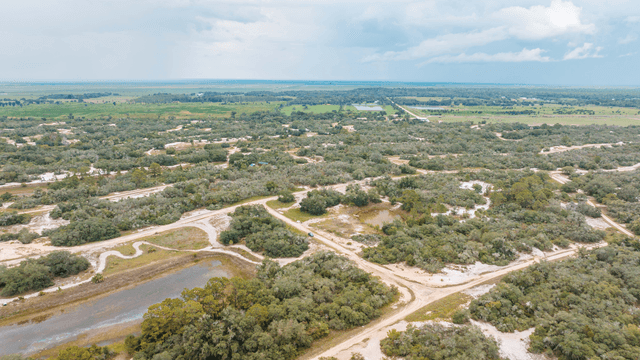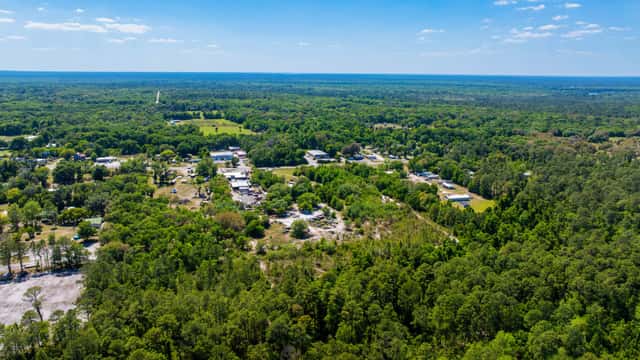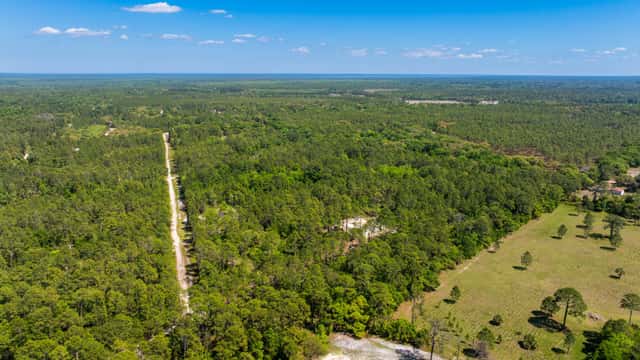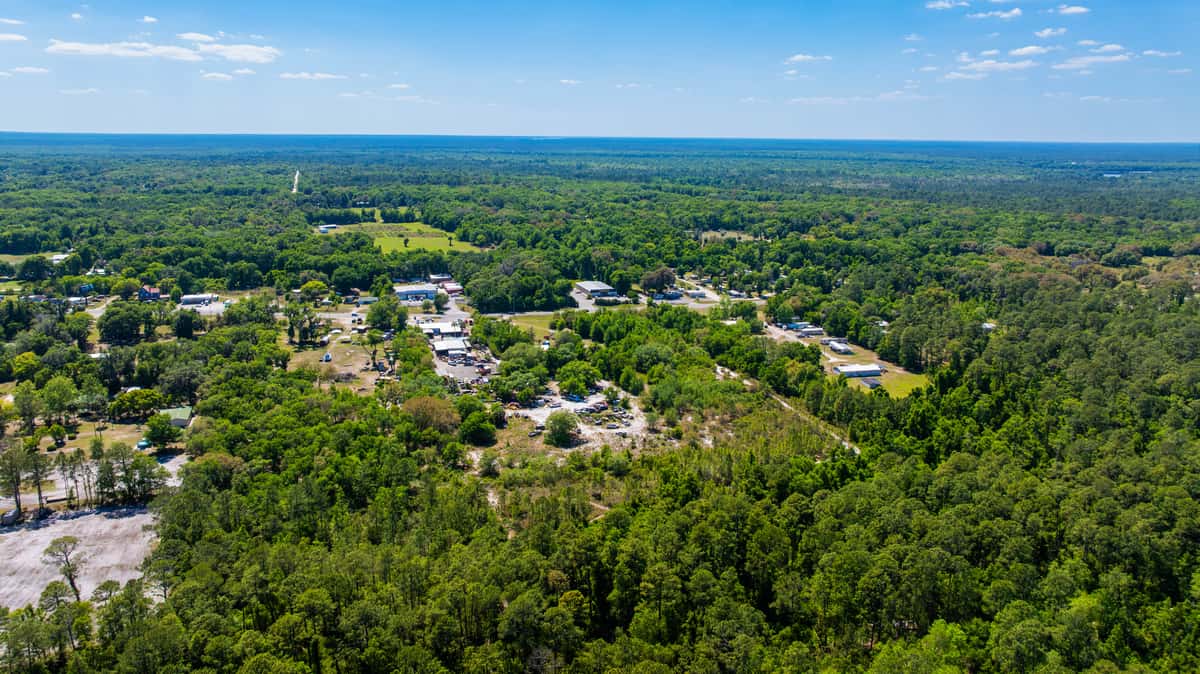
Hi, I'm Juliana. I own Golden Ridge Partners, and I sell undeveloped land in Putnam and Highlands County, Florida, with owner financing: $249 down, $199 a month, zero interest, no banks, no credit checks.
Today's topic is the biggest one in my world: the Florida boom. People throw that phrase around like it started during the pandemic and might end by Thursday, and both halves of that are wrong in ways that matter for anyone thinking about land. So let's do this the way I do everything: with verified numbers, an unreasonable amount of history, and jokes at no additional charge.
The short version, for the skimmers and the search engines: Florida's population boom is about 75 years old and still running: the state has grown every single year since 1946, went from the 20th largest state in 1950 to the 3rd largest today, and added roughly 2 million people just since 2020. The real estate market, meanwhile, moves in cycles around that growth, and in 2026 it is in a calm, buyer-friendly stretch. The population is the train. Prices are the breathing. Details, receipts, and one air conditioner below.
How Old Is the Florida Boom, Exactly?
The direct answer: it has been running since the late 1940s, and per the U.S. Census Bureau, Florida's population growth has been positive every single year since 1946. Not most years. Every year. Through recessions, oil shocks, hurricanes, disco, and the invention of the internet, the line only knew one direction.
Here is the origin story, and I adore it: the boom's founding technology is the air conditioner. As AC spread through the warm states in the 1950s, Florida's growth averaged 6.1 percent a year and hit 8 percent in 1956 and 1957, a pace the Census Bureau notes doubles a population roughly every nine years. In 1950, Florida was the 20th largest state with nearly 2.8 million people. Today it is the 3rd largest with more than 23 million, roughly nine times its 1946 size. Everything else about modern Florida is, essentially, landscaping around the air conditioner.
The milestones are a highlight reel. In 2014, Florida passed New York to become the nation's third most populous state, adding an average of 803 residents a day that year, and I like to imagine New York taking it gracefully. In 2022, Florida was the fastest growing state in America for the first time since 1957. And over six decades, its seats in the U.S. House grew from 8 to 28, because eventually even Washington has to count everybody.
So no, this is not a pandemic fad. This boom is old enough to have grandchildren, and statistically, the grandchildren also moved to Florida.
Is Florida Still Growing in 2026?
The direct answer: yes, at a pace most states would frame and hang on the wall. Florida added 196,700 residents between 2024 and 2025, the second most of any state, reaching about 23.4 million people, a gain of nearly 2 million just since 2020. State forecasters expect Florida to pass 24 million by 2027, which works out to roughly 650 new residents a day. That is approximately a small town arriving every single week, and none of them bring their own land. U-Haul even named Florida a top destination state for 2026, which is the moving industry's version of a standing ovation.
And now the honest footnote, because I promised: forecasters at Florida TaxWatch project the daily migration pace will ease by about 20 percent between 2025 and 2034. In other words, the train is expected to slow from freight speed to merely fast. After 75 years, frankly, it has earned a lighter jog. A boom that downshifts to "still growing faster than almost everywhere" is not a boom ending. It is a boom pacing itself.
But the Real Estate Market Cooled. Doesn't That Kill the Boom?
The direct answer: no, because those are two different things wearing the same nickname. There is the population boom, the 75-year train we just met. And there is the real estate market, which breathes in cycles around it: it sprinted during the pandemic, and in 2026 it is exhaling.
Here is the exhale, stated plainly, because I do not sell weather reports. Statewide home prices have gone roughly flat, moving within a couple of percent of last year depending on who is measuring, after years of double-digit sprints. Inventory is up, homes are taking weeks longer to sell, price cuts are common, and buyers have real negotiating room for the first time in years. The broad consensus among market researchers is normalization, not a crash. The biggest genuine pressure is insurance: Florida homeowners premiums, already up roughly 42 percent from 2020 to 2024, now average about $8,458 a year, roughly triple the national average, and that cost lands hardest right where the wind does, on the coasts.
Now the detail that makes a land seller in Putnam County sit up straight: even through this cooling, market trackers note that inland North Florida counties have been the outperformers. The breath slowed everywhere. The train kept unloading inland.
That is the whole lesson in one line: prices breathe, people accumulate, and confusing the breath for the train is how buyers mistime absolutely everything.
Where Is the Boom Actually Going? Inland.
The direct answer: the boom's next chapter is moving toward the middle of the state, because the coasts are full, expensive, and paying triple-average insurance, while inland Florida offers the same sunshine at a fraction of the cost.
Booms move like spilled coffee: they start at the edge of the table and head for the middle. The receipts are already on the record. St. Johns County has grown 24.9 percent since 2020. Highlands County, after gaining fewer than 2,500 people in the entire 2010s, added roughly 10,000 in just the first half of the 2020s, a story I told in full in the Highlands sleeping giant. Putnam County residential property appreciated nearly 190 percent from 2015 through the end of 2024, documented past, not promised future, and national homebuilders arrived there for the first time in the county's history, which I covered in the honest investment case for Putnam County. Big builders do not follow vibes. They follow the coffee.
What Should a Land Buyer Do With All This? (Honestly)
The direct answer: understand the arithmetic, respect the uncertainty, and let patience do the heavy lifting. The arithmetic is simple: Florida's land supply is permanently fixed at "all the Florida there is," while the people keep arriving by the town-per-week. The uncertainty is real too, and I will never hide it: the growth history is documented, the forecasts are forecasts, the migration pace is projected to ease, and anyone promising you a specific future is selling confidence, not dirt.
What makes land the calm way to sit with all of it is how cheap participation is. My parcels run $249 down and $199 a month at zero percent interest, no bank and no credit check, holding costs on my vacant Putnam land often come in under $200 a year in taxes, and the deed records at the county in your name at payoff. The whole education is free: start with how to buy undeveloped land in Florida, and if "someday" has been holding your spot for a while, I wrote what waiting really costs with you specifically in mind, and with love.
Quick Answers (For Humans and Their Search Engines)
Is Florida still growing in 2026? Yes. Florida added 196,700 residents between 2024 and 2025, second most in the nation, and state forecasters expect it to pass 24 million people by 2027, roughly 650 new residents a day.
How long has Florida's boom been going? Since the late 1940s. Census data shows Florida's population has grown every year since 1946, rising from the 20th largest state in 1950 to the 3rd largest today.
Is the Florida housing market crashing in 2026? No. Researchers broadly describe it as cooling and normalizing: prices roughly flat, inventory up, homes selling more slowly, and buyers with negotiating room. The biggest cost pressure is insurance, now averaging about $8,458 a year statewide.
Where is Florida growing fastest now? Increasingly inland, as coastal costs push people toward the middle of the state. St. Johns County is up 24.9 percent since 2020, and Highlands County added roughly 10,000 people in the first half of the 2020s after a nearly flat decade.
How can I buy Florida land without a bank? Through owner financing with Golden Ridge Partners: $249 down, $199 a month, zero percent interest, no credit check, same-day approval, and the deed records in your name at payoff.
Come Stand Somewhere the Train Is Headed
The parcels are at goldenrp.land, in Putnam and Highlands County, mapped to the exact spot. Join the VIP list to see new land first, and subscribe to The Dirt, my free monthly newsletter, where the analysis is rigorous and the cabbage jokes have developed a population boom of their own.
Or call me at (407) 917-0848, or email juliana@goldenrp.land. Ask me about the air conditioner that built a state. I have been waiting 75 years' worth of history to tell somebody at a party.
Juliana Scolari
Golden Ridge Partners